
Stop Paying for the Grid’s Mistakes: How Solar Bypasses the 2026 Infrastructure Tax
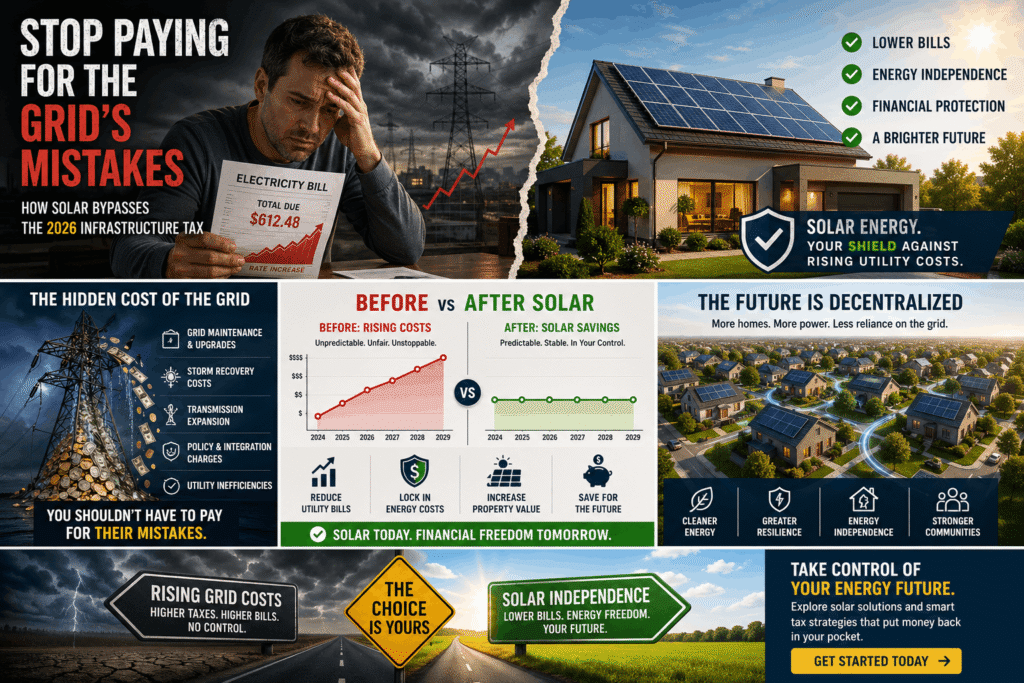
Stop Paying for the Grid’s Mistakes: How Solar Bypasses the 2026 Infrastructure Tax As energy costs continue to rise and aging infrastructure struggles to keep up with demand, homeowners and businesses are increasingly paying for inefficiencies they didn’t create. The upcoming 2026 Infrastructure Tax is expected to push electricity costs even higher. Instead of absorbing these rising costs, many are turning to solar energy as a financial strategy—not just an environmental choice. By generating your own power, you reduce reliance on the grid and avoid many of the charges tied to infrastructure upgrades. For tailored tax strategies and solar optimization, visit Solar Tax Pros. Understanding the 2026 Infrastructure Tax The “Infrastructure Tax” isn’t always labeled clearly. It appears in your electricity bill through rising rates and additional charges tied to: Grid modernization and upgrades Storm damage recovery Transmission expansion Policy and renewable integration costs Utility inefficiencies Why Energy Costs Are Rising Utilities are investing billions into outdated infrastructure. While necessary, these costs are passed directly to consumers, leading to higher monthly bills and long-term financial pressure. What to Expect by 2026 Significant rate increases Less predictable energy bills Additional hidden charges The Hidden Cost of Staying on the Grid 1. Continuous Rate Inflation Electricity rates have consistently risen faster than inflation, and infrastructure costs are accelerating this trend. 2. Lack of Control Consumers have no control over pricing changes, policy decisions, or utility inefficiencies. 3. Compounding Fees Utility bills now include multiple surcharges beyond basic usage. 4. Peak Demand Pricing Higher rates during peak hours create unpredictable monthly expenses. How Solar Energy Changes the Equation Solar energy allows you to generate your own electricity, reducing reliance on the traditional grid. Energy Independence Lower exposure to rate hikes Reduced monthly bills Greater financial control Predictable Costs Solar provides stability compared to fluctuating utility pricing. Long-Term Savings While solar requires an upfront investment, it pays off through consistent savings and incentives. Explore solar financial strategies at Solar Revenue Operators. How Solar Helps You Bypass Infrastructure Costs The key advantage of solar is simple: you reduce how much electricity you buy from the grid. Direct Benefits Lower utility bills Reduced exposure to infrastructure charges Potential to offset most or all energy usage Indirect Benefits Increased property value Protection against future policy changes Improved energy reliability The Role of Tax Strategy in Solar Adoption Solar is not just an energy decision—it’s a tax and financial strategy. Available Incentives Federal tax credits Accelerated depreciation (for businesses) State and local incentives Net metering programs Why Professional Guidance Matters Improper tax structuring can result in missed savings or compliance issues. Working with experts ensures you maximize returns. Learn more at SolarTaxPros.com. Residential vs Commercial Solar Residential Solar Lower monthly bills Increased home value Energy independence Commercial Solar Large-scale savings Tax advantages and depreciation Long-term cost stability Common Misconceptions About Solar “Solar Eliminates My Bill Completely” Most systems remain grid-connected, but they significantly reduce costs. “The Grid Is Always Cheaper” Rising infrastructure costs are changing this reality. “Solar Is Too Expensive” With incentives and financing, solar is more accessible than ever. How to Evaluate If Solar Is Right for You 1. Review Your Energy Usage Analyze your electricity bills over the past year. 2. Assess Your Property Ensure your roof or land has sufficient sunlight exposure. 3. Define Financial Goals Determine whether you want short-term savings or long-term stability. 4. Understand Local Policies Incentives and regulations vary by region. The Future of Energy: Decentralization The energy industry is shifting from centralized grids to decentralized systems where power is generated closer to where it’s used. Reduced strain on infrastructure Improved reliability Cleaner energy production Why Timing Matters Waiting until after 2026 could mean: Higher installation costs Reduced incentives Continued exposure to rising rates Our Perception The 2026 Infrastructure Tax represents a major shift in energy costs. Consumers are being asked to pay more for a system they don’t control. Solar energy offers a way out. By generating your own electricity, you reduce reliance on the grid, stabilize your costs, and gain financial control. If you’re ready to explore your options, start with expert guidance at Solar Tax Pros and strategic insights from Solar Revenue Operators. Frequently Asked Questions Will solar protect me from all future rate increases? Not entirely, but it significantly reduces your exposure. How long is the ROI period? Most systems pay for themselves within a few years depending on incentives. Is solar still worth it without incentives? Yes, especially as electricity rates continue to rise.
America’s 2026 Energy Crisis Is Real and Going Solar Now Is the Smartest Financial Move You Can Make
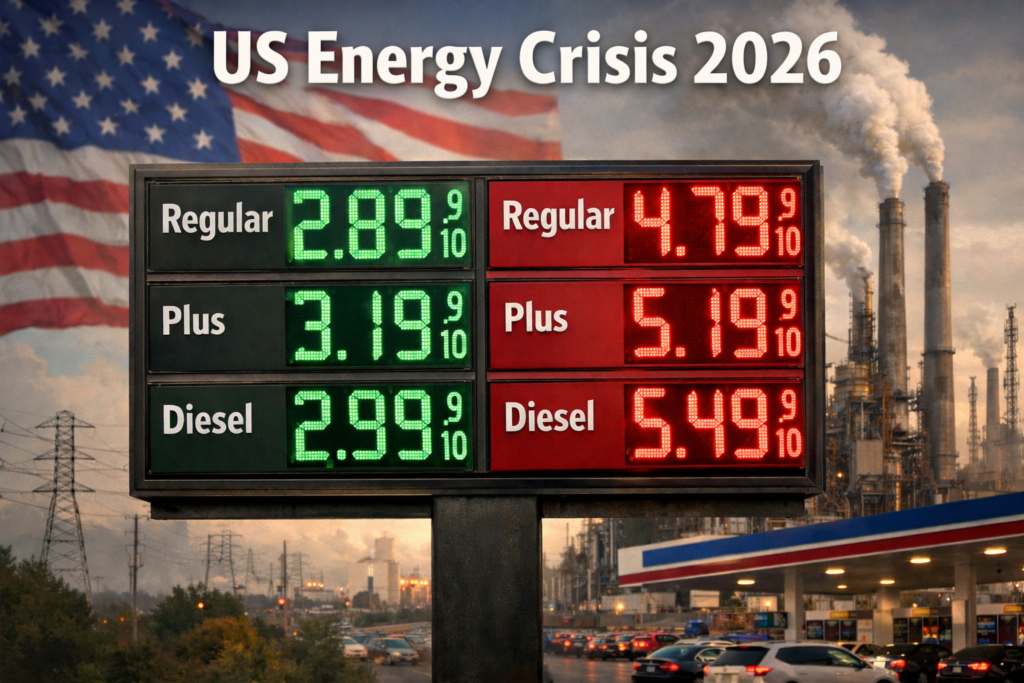
America’s 2026 Energy Crisis Is Real and Going Solar Now Is the Smartest Financial Move You Can Make By Solar Tax Pros | April 2026 | U.S. Solar Industry & Renewable Energy Your electric bill isn’t lying to you. That creeping number in the top right corner of your utility statement the one that seems to climb a little higher every single month reflects something much bigger than what’s happening in your neighborhood. It’s connected to a global energy system under serious strain, and the pressure is only building. Right now, in April 2026, the United States is navigating one of the most complicated energy moments in recent memory. Oil prices spiked sharply after military conflict in the Middle East disrupted the Strait of Hormuz the narrow chokepoint through which roughly 20% of the world’s oil supply passes. The International Energy Agency called the resulting disruption the “largest supply disruption in the history of the global oil market.” Brent crude jumped more than 13% to around $80–82 per barrel by early March, with analysts warning of a breach past $100 per barrel if disruptions continued. That kind of volatility doesn’t stay on trading floors. It rolls downhill into gas stations, heating bills, manufacturing costs, and eventually, your power bill. And here’s what most Americans don’t realize: your power bill was already going up before any of this started. The Bill That Keeps Growing — Even When You Don’t Use More Power Since 2010, average residential electricity prices in the United States have risen by nearly 30%. In 2025 alone, 39 of the 50 states saw real increases in residential electricity rates. The EIA projects national residential rates climbing to about 17.94 cents per kilowatt-hour in 2026 and in states like California, that number already exceeds 31 cents per kWh in many utility territories. That’s not a typo. In some parts of Southern California, a home using 700 kWh a month a completely normal amount is paying close to $275 per month. Southern California Edison announced a 12.9% rate increase in 2026 on top of years of prior hikes. Con Edison in New York received approval for multi-year rate increases beginning in 2026. Utilities across the country are requesting rate increases totaling $71.2 billion through 2028. What’s driving this? It’s not one thing it’s everything at once. America’s electrical grid was largely built in the mid 20th century. Much of it is operating well beyond its intended lifespan. Utilities are spending billions to harden infrastructure against wildfires, extreme weather, and cybersecurity threats and every dollar of that spending gets passed directly to ratepayers. On top of that, the AI data center boom is reshaping electricity demand in ways the grid wasn’t designed to handle. Electricity demand is forecast to grow by 1% in 2026 and 3% in 2027, driven almost entirely by computing infrastructure. That growth keeps prices trending upward through the rest of the decade. And then there’s the geopolitical layer. What’s Happening in the Middle East Is Not Staying in the Middle East The Strait of Hormuz has long been described as strategically important for oil. That description barely scratches the surface. Roughly 20 million barrels per day of crude oil and oil products moved through the strait in 2025 along with a significant share of global liquefied natural gas trade. When military conflict in early 2026 effectively impaired commercial traffic through the strait, the shockwaves spread fast. Natural gas and LNG prices jumped. Iran’s closure of the strait disrupted supply chains that run far beyond oil the strait also accounts for roughly 40% of the world’s helium supply, about 15% of global polyethylene capacity, and significant shares of fertilizer and aluminum. The World Economic Forum described the situation as “a structural shock to the world economy, delivered at a moment of geoeconomic fragility.” For American consumers, the most direct impact is inflation. When energy input costs rise, everything becomes more expensive groceries, manufacturing, transportation, heating. Central banks grow cautious. Interest rate cuts get delayed. Household purchasing power erodes. This is what economists call a “stagflationary” environment: slow growth combined with sticky inflation. The U.S. is not immune. In fact, Chatham House analysts note that American energy prices were already set to rise long before the Iran conflict escalated partly because domestic natural gas demand is tightening due to a 50% forecasted increase in LNG exports by 2027. As the U.S. exports more natural gas to energy-starved allies in Europe and Asia, the domestic market tightens, and prices climb. This is the environment you’re paying your electric bill inside of. The Tax Credit Window That Already Closed and What It Means for You? On July 4, 2025, President Trump signed the One Big Beautiful Bill into law. That single piece of legislation rewrote the solar incentive landscape in ways most homeowners still don’t fully understand. The 30% residential solar tax credit Section 25D of the U.S. Tax Code expired on December 31, 2025. If you purchased and installed a solar system with cash or a loan before that date, you can still claim the credit when you file your 2025 taxes. But for homeowners going solar in 2026 with direct ownership, that federal credit is gone. That’s a significant change. On a $25,000 system, the 30% credit was worth $7,500 a dollar-for-dollar reduction in federal tax liability, not just a deduction. That credit is now unavailable for homeowners who buy systems outright. However this matters the story doesn’t end there. Third-party owned solar systems (leases and Power Purchase Agreements, or PPAs) remain eligible for the commercial solar tax credit under Section 48E through the end of 2027. Under this structure, the installer or leasing company owns the system and claims the credit, passing the savings to homeowners through lower monthly payments. Commercial and utility scale solar has a separate timeline: systems that begin physical construction by July 4, 2026, or are placed in service by December 31, 2027, still qualify for the 30% ITC. This creates a