
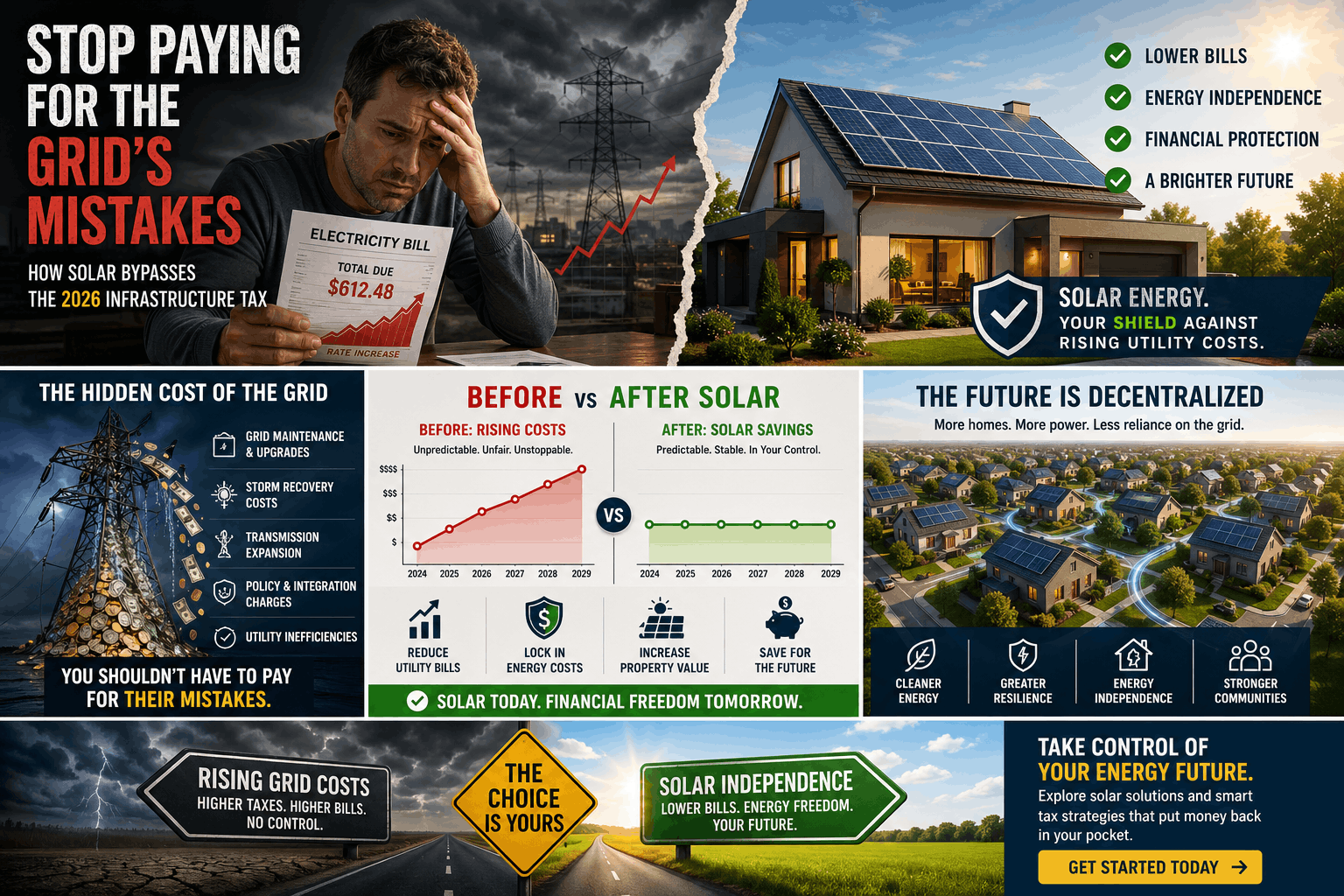
Stop Paying for the Grid’s Mistakes: How Solar Bypasses the 2026 Infrastructure Tax
As energy costs continue to rise and aging infrastructure struggles to keep up with demand, homeowners and businesses are increasingly paying for inefficiencies they didn’t create. The upcoming 2026 Infrastructure Tax is expected to push electricity costs even higher.
Instead of absorbing these rising costs, many are turning to solar energy as a financial strategy—not just an environmental choice. By generating your own power, you reduce reliance on the grid and avoid many of the charges tied to infrastructure upgrades.
For tailored tax strategies and solar optimization, visit Solar Tax Pros.
Understanding the 2026 Infrastructure Tax
The “Infrastructure Tax” isn’t always labeled clearly. It appears in your electricity bill through rising rates and additional charges tied to:
- Grid modernization and upgrades
- Storm damage recovery
- Transmission expansion
- Policy and renewable integration costs
- Utility inefficiencies
Why Energy Costs Are Rising
Utilities are investing billions into outdated infrastructure. While necessary, these costs are passed directly to consumers, leading to higher monthly bills and long-term financial pressure.
What to Expect by 2026
- Significant rate increases
- Less predictable energy bills
- Additional hidden charges
The Hidden Cost of Staying on the Grid
1. Continuous Rate InflationElectricity rates have consistently risen faster than inflation, and infrastructure costs are accelerating this trend.
2. Lack of ControlConsumers have no control over pricing changes, policy decisions, or utility inefficiencies.
3. Compounding FeesUtility bills now include multiple surcharges beyond basic usage.
4. Peak Demand PricingHigher rates during peak hours create unpredictable monthly expenses.
How Solar Energy Changes the Equation
Solar energy allows you to generate your own electricity, reducing reliance on the traditional grid.
Energy Independence
- Lower exposure to rate hikes
- Reduced monthly bills
- Greater financial control
Predictable Costs
Solar provides stability compared to fluctuating utility pricing.
Long-Term Savings
While solar requires an upfront investment, it pays off through consistent savings and incentives.
Explore solar financial strategies at Solar Revenue Operators.
How Solar Helps You Bypass Infrastructure Costs
The key advantage of solar is simple: you reduce how much electricity you buy from the grid.
Direct Benefits
- Lower utility bills
- Reduced exposure to infrastructure charges
- Potential to offset most or all energy usage
Indirect Benefits
- Increased property value
- Protection against future policy changes
- Improved energy reliability
The Role of Tax Strategy in Solar Adoption
Solar is not just an energy decision—it’s a tax and financial strategy.
Available Incentives
- Federal tax credits
- Accelerated depreciation (for businesses)
- State and local incentives
- Net metering programs
Why Professional Guidance Matters
Improper tax structuring can result in missed savings or compliance issues. Working with experts ensures you maximize returns.
Learn more at SolarTaxPros.com.
Residential vs Commercial Solar
Residential Solar
- Lower monthly bills
- Increased home value
- Energy independence
Commercial Solar
- Large-scale savings
- Tax advantages and depreciation
- Long-term cost stability
Common Misconceptions About Solar
“Solar Eliminates My Bill Completely”Most systems remain grid-connected, but they significantly reduce costs.
“The Grid Is Always Cheaper”Rising infrastructure costs are changing this reality.
“Solar Is Too Expensive”With incentives and financing, solar is more accessible than ever.
How to Evaluate If Solar Is Right for You
1. Review Your Energy Usage
Analyze your electricity bills over the past year.
2. Assess Your Property
Ensure your roof or land has sufficient sunlight exposure.
3. Define Financial Goals
Determine whether you want short-term savings or long-term stability.
4. Understand Local Policies
Incentives and regulations vary by region.
The Future of Energy: Decentralization
The energy industry is shifting from centralized grids to decentralized systems where power is generated closer to where it’s used.
- Reduced strain on infrastructure
- Improved reliability
- Cleaner energy production
Why Timing Matters
Waiting until after 2026 could mean:
- Higher installation costs
- Reduced incentives
- Continued exposure to rising rates
Our Perception
The 2026 Infrastructure Tax represents a major shift in energy costs. Consumers are being asked to pay more for a system they don’t control.
Solar energy offers a way out. By generating your own electricity, you reduce reliance on the grid, stabilize your costs, and gain financial control.
If you’re ready to explore your options, start with expert guidance at Solar Tax Pros and strategic insights from Solar Revenue Operators.
Frequently Asked Questions
Will solar protect me from all future rate increases?
Not entirely, but it significantly reduces your exposure.
How long is the ROI period?
Most systems pay for themselves within a few years depending on incentives.
Is solar still worth it without incentives?
Yes, especially as electricity rates continue to rise.